Posts

Showing posts with the label American literature

Ozathon #1: The Wonderful Wizard of Oz

Image
The Wonderful Wizard of Oz, by L. Frank Baum   It's such a long time since I read this story, but I remember all the illustrations so well!  I must have read it many times as a kid. I think we all know the story, so I won't repeat it, except to point out that there is about three times as much material in the book as there is in the movie.  I'm not a huge fan of the movie -- I didn't grow up on it like so many people did -- so I won't say a lot about it either.  But Baum puts in a whole lot of hazards and side-trips that couldn't fit in the film version! L. Frank Baum was wanting to write an imaginative, fairy-tale type of story for the new America.  Forget all those princes and princesses, and especially all the violence, death, and heavy-duty moralizing of 19th-century children's literature!  This was going to be a fun, quirky story for a vigorous, expanding America, and it was going to star some familiar sights for an American child, like scarecrows, fa...

Finishing all those books in November

Image
 I'm working on that pile!  Here are three of my pile books, plus two quick reads I stuck in around the edges. Junk Film: Why Bad Movies Matter , by Katharine Coldiron -- This book was just a delight to me, but then it was written by somebody who likes many of the same terrible movies I do but is much more knowledgeable than I am.  The first third of the book is dedicated to a monograph of Plan 9 From Outer Space and what makes it so interesting as a terrible movie.  Wonderful!  She talks about a failed TV show called Cop Rock in which somebody mashed a serious procedural cop show with a musical -- "I promise this is true."  Coldiron gets into literature and compares Irene Iddesleigh with Sean Penn's novels.  She explains why a low-budget 70s horror film called Death Bed is actually pretty good.  I loved it. If you like bad movies, this is a great book for you.  Others possibly not so much.     How Democracies Die , by Steven L...

CC Spin #33: Motl the Cantor's Son

Image
 Motl, the Cantor's Son , by Sholem Aleichem  I'm late delivering my Spin title, even though I finished it a couple of weeks ago!  I enjoyed this so much.  Various people told me that it was a lot lighter than Tevye the Dairyman , which I read a few years ago, and it definitely was. Motl is a little boy, 8 and 9 years old, telling his story of getting to America -- in installments, because it was published as a serial in a newspaper.  We start in a shtetl in the Russian empire; I'm pretty sure it would be Ukraine now.  Motl's family is poor but cultivated, because his father is Peysi the cantor and a very well-respected man.  After his death, the family is left penniless and Motl's older brother resolves to take everyone to America, 'everyone' being their mother, Elyahu the brother, his wife, his best friend (a comedic bookworm given to declaiming about Columbus), and little Motl.  It's about 1910, the pogroms are getting worse, and America promis...

A Winter Riffle of Reviews

Image
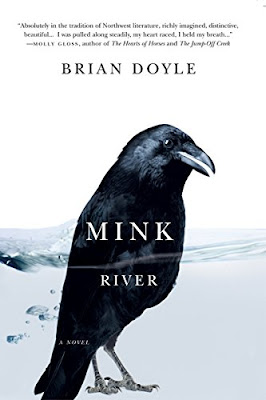
I'm hoping to get this year wrapped up in this final week.  Which is kind of a lot to leave undone until December 26, so wish me luck! I've read some neat books and a good bit of fluff in the last couple of months, and I'm just going to run through some of the ones I want to count for challenges...    Mink River, by Brian Doyle Doyle writes the story of a town: Neawanaka , a tiny place on the Oregon coast where a river meets the sea.  It's beautifully written, and I highly recommend it. Read Dangerously, by Azar Nafisi Written as letters to her (deceased) father, Nafisi discusses the importance of reading literature, especially in troubled times.  I wanted to save a couple of quotations: It is when you cast off the mantle of victimhood that you become a menace, a danger to your oppressor.  It it intriguing that in order to cease being a victim, you must accept responsibility for who you are and who you might become -- thus, ironically, acknowledging ...

Quicksand

Image
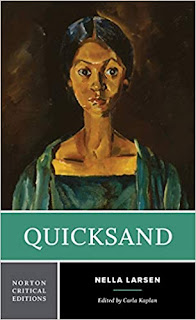
 Quicksand, by Nella Larsen    Some time ago I read Nella Larsen's 1929 novel, Passing, and I also wanted to read her earlier novel from the year before, which is semi-autobiographical.   Helga Crane is mixed-race, the daughter of a Danish immigrant woman and a man from the Danish West Indies.*  She is a teacher at Naxos, a (fictional) school in the South built along the lines of Booker T. Washington's ideas, and she hates it.  Helga drops everything and goes to Chicago, where she was raised by her mother's white relatives, and eventually ends up in New York City.  Here she discovers Harlem and Black culture for the first time. Helga is a mercurial woman who falls in love with one way of life, is sure it will be permanent, and eventually feels an absolute need to escape.**  After a couple of years in Harlem, she flees to Copenhagen, where she lives with an aunt and uncle, and loves that until she absolutely must flee.  Back in Harlem, s...

CC Spin #28: Plum Bun

Image
 Plum Bun, by Jessie Redmon Hughes (1928) Jessie Redmon Fauset Jessie Redmon Fauset (1882 – 1961) was a prominent writer, editor, educator, and poet in African-American letters.  She edited the NAACP's magazine, The Crisis , from 1919 - 1926, and mentored many eminent writers, including Langston Hughes.  She then taught French and published four novels, Plum Bun being the second, and usually wrote about discrimination, passing, and feminism.  She wanted to portray African-Americans in a realistic and positive manner, celebrating Black culture and family.  While she was celebrated in her day, she was quickly forgotten as literary fashion moved on,  and she remained obscure for several decades until feminists revived her writing in the early 80s.  She's now recognized as an important part of the Harlem Renaissance.  The subtitle of this novel is -- intriguingly -- A Novel Without A Moral .  The title itself is based on a nursery rhyme...

Summerbook #8: The Lady of Godey's

Image
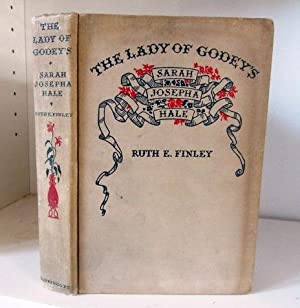
 The Lady of Godey's: Sarah Josepha Hale, by Ruth E. Finley  I had never really heard of Sarah Josepha Hale, but was recommended this 1931 biography some time ago -- and what a great decision that was!  Anybody interested in women's history (or even American history) would do well to read this, because Hale should be far better known as a hero of American feminism. Born in 1788 in a tiny New Hampshire village, Hale was extremely fortunate in having a literate mother who believed in education for girls as well as boys.  At this time, fewer than half of American women could read and write.  When she married at 21, her husband encouraged her literary pursuits, and they loved to read aloud together in the evenings.  Mr. Hale died young, leaving a widow with five children to support, and so Mrs. Hale decided to make a living at what she did best.  She produced a novel and a good deal of poetry, and then she got a job offer: to edit and produce the first wo...

Summerbook #5: A Connecticut Yankee in King Arthur's Court

Image
  A Connecticut Yankee in King Arthur's Court, by Mark Twain Oh gosh, it is so long since I read this tall tale that I had forgotten everything except that Trina Schart Hyman did wonderful illustrations, and there's a lot about slavery.  So earlier this year I put it on my pile of books to read soon, and it was so much fun.   This story is a bit of a mish-mash, really.  It started as a send-up of romantic medievalist tales after Twain had a dream in which he was a knight-errant himself -- but how do you scratch an itch in armor, much less do your private business?  Where do you keep your hanky?  Don't you clank a lot in church?   So Twain took a downright, hard-headed, democratic-minded mechanical man, Hank Morgan, and imagined how he would modernize Camelot according to his desires.  Surely a man who knows how to manufacture gunpowder and telegraph wire would be able to get up to a lot of mischief!  But then, a modern man also has ...

Mules and Men

Image
 Mules and Men, by Zora Neale Hurston I particularly wanted to read Mules and Men this month as part of Erica's Zora Neale Hurston reading project.   That was the title that I most wanted to read; published in 1935, it represents her anthropological work, in which she collected African-American folktales, legends, and practices. There are ten chapters of folktales, in which Hurston narrates her trip and experiences as well as the stories she collected.  She starts in her hometown of Eatonville, where she is known, and has to convince people to tell her "lies" -- which, while entertaining, are not considered worthwhile.  Once the local fellows are in on the project, they take her to parties and dances, and she moves ever further out, visiting a logging camp and a gambling club, among other places.  Hurston collects songs, most especially "John Henry," which must have become a staple folksong in schools somewhat later; it was the sort of song we were all taught wh...

Jonah's Gourd Vine

Image
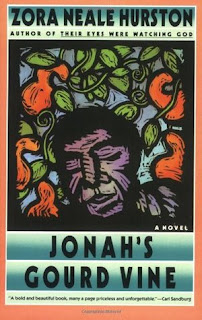
  Jonah's Gourd Vine, by Zora Neale Hurston Erica at The Broken Spine has started a two-year project of reading the works of Zora Neale Hurston, which I think is an excellent plan.  Although I'm not planning to participate every month (who knows, I might!), I am planning to join in here and there.  The first book on the list is Hurston's first novel, Jonah's Gourd Vine, which was published in 1934, and I'm here to tell you that it's a great novel.  As a young man, John Buddy leaves home at 16 to escape increasing abuse from his stepfather.  He is strong and handsome, and is a great success with the other workers.  Lucy is only a schoolgirl when they first meet, but after a few years, they marry.  Lucy is a careful planner, where John tends to take things as they come. Eventually they move down to Florida, to an all-black town,* where John works as a carpenter and Lucy raises their many children.  John has a wandering eye, and Lucy has to put up ...

Summerbook #10: The Forest of Enchantments

Image
The Forest of Enchantments, by Chitra Banerjee Divakaruni I have been looking forward to this book for SO LONG.  And then when I got hold of it, I delayed reading it because I was looking forward to it so much, which is a silly habit of mine.  But I saved it for a summer treat, and wow, it was great. Ten years ago, after Divakaruni wrote The Palace of Illusions , she said that her next project would be the story of Sita from the Ramayana .  Then it was really difficult to get started, because Sita is a hugely important figure, and one that just about all Indian women have to reckon with.  Sita is the embodiment of perfect womanhood and wifehood, and girls are often told "May you be like Sita."  But a lot of times that carries the meaning of 'be meek and mild and put up with everything,' because Sita is often held up as more of a Griselda-like model.  A deep dive into the story of Sita, however, reveals a woman who is brave, strong and determined, and Divak...

Tales From A Rolltop Desk

Image
Tales From A Rolltop Desk, by Christopher Morley Hey, two Christophers in a row!  Ha.  This Christopher, however, was an American journalist type who wrote a lot of funny stories, most famously Parnassus on Wheels and The Haunted Bookshop .  This little tome is a collection of short stories published in magazines in the late 1910s, back when short stories in magazines were the great American pastime.  Just about all of them are set in the journalistic scene of New York City, and they're nearly all funny -- but there's a mystery and a ghost story too!  They feature bright, clever secretaries and young reporters scrambling for their wages -- all the usual suspects for New York stories, and often reminded me of P. G. Wodehouse's New York stories, except these came first.  I wonder if the two knew each other... ...having done a few minutes of poking around, I can't see how the two could have avoided meeting, though there's nothing to indicate a friendship....

Passing

Image
Passing, by Nella Larsen It took me a while to get to one of the great Harlem Renaissance women writers, and I got there kind of backwards, but here I am at last.  Nella Larsen was born in the US, but her mother was Danish and her father was from the Danish Virgin Islands (Denmark had a colony there from 1754 - 1917, at which point it sold out to the US).  She worked as a librarian (yay!) and then as a nurse, and also wrote works which weren't as appreciated at the time as they are now.  She's now considered one of the major writers of the Harlem Renaissance (or so says my book). I first heard of Larsen because she was the person who circulated a copy of the Danish author J. P. Jacobsen's first novel, Marie Grubbe , around her literary circle, which wound up sparking a truly great novel.  (See my post for details on the story, which I think is really neat.)    And so I've been wanting to read Larsen's own work for a while.  Passing has been on my ...

The Grapes of Wrath

Image
The Grapes of Wrath, by John Steinbeck For Karen's Back to the Classics Challenge, I needed a classic set in a place where I have lived, and the solution was obvious: The Grapes of Wrath .  Cleo wanted to do a readalong in December, which suited me just fine, and so three people set out to read it together.  It's possible the timing was less than ideal, as this is the least wintery or Christmassy book I have ever read in any December ever.  It's an August book for sure. What connection do I have to the locations in this novel?  The Joads set out from Oklahoma and take Route 66, with their destination being Bakersfield, California.  It's the only time I've ever seen anybody describe the land around Bakersfield in glowing terms.  I was born in Bakersfield, and so was my dad; his parents were not Okies, but they were pretty much part of the same migration west around that time.  (I did have a great-aunt who was an Okie; she said when she was little th...

Summerbook #3: Cat's Cradle

Image
Cat's Cradle, by Kurt Vonnegut Funny that I should read two books practically at the same time that use the cat's cradle game as a theme.  I wound up getting out this old Dover book I have about 'string games around the world' only I can't find the yarn to try them out.  I'm sure there is yarn around here someplace... Anyway.  Cat's Cradle is a nice read.  The narrator tells his story, starting with his project of writing a book about what was happening in America on the day that the bomb was dropped on Hiroshima.   But now he's a Bokonist, and he's had some adventures with his friend Newt, whose father was one of the major physicists working on the bomb.  That father also invented ice-nine , and Newt and his siblings have some. Bokonism is, I think, the famous part of this novel, and it's where the notion of a karass comes from.  The novel I'd read before made me think a karass was just your band of mates, but it's not; it'...

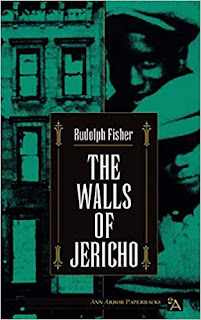
Summerbook #2: Walls of Jericho

Image
Walls of Jericho , by Rudolph Fisher A few years back I really enjoyed The Conjure-Man Dies , a 1932 mystery by Harlem Renaissance writer Rudolph Fisher.  This novel was written a few years earlier; it was published in 1928.  Fisher paints a portrait of a Harlem preoccupied with both race and class. Fisher has a cast of characters that are enormously disparate, but that intertwine in intriguing ways.  We have a team of moving men, led by Shine, an Ajax of a man; Ralph Merritt, a successful lawyer; Linda, an ambitious working girl, and several others. Merritt is buying a home just outside the edge of Harlem in a white neighborhood -- mostly to annoy his neighbors.  At first, the story might seem to be about the 'walls of Jericho' of white society, but there are other walls that turn out to be more central.  Shine (whose actual name is Joshua) comes to realize that in order to have the life he wants, he must tear down his own inner walls, and the same is true ...

Parnassus on Wheels and The Haunted Bookshop

Image
Parnassus on Wheels and The Haunted Bookshop, by Christopher Morley These fun books came across the donation table and I just read them in spare moments.  Several years ago, I downloaded The Haunted Bookshop , but I couldn't understand the first chapter at all, so I quit.  I had no idea that it was a sequel to Parnassus on Wheels !  Now it all makes sense.... Parnassus on Wheels is the narrative of Helen McGill, spinster, who lives with her brother on a farm.  Until a few years ago, they farmed happily together, but then Andrew wrote a book and became a successful writer about the joys of country life, and things have never been the same since.  Helen is pretty fed up and the last straw arrives on a wagon in the form of a mobile bookstore, Parnassus on Wheels; the owner wants to sell the outfit to Andrew so he can retire and write his book, about the joys of bookselling.  Helen decides that it's high time she got to go out galliv...