Posts

Showing posts with the label Literary Movements Challenge

The Symmetry Teacher

Image
The Symmetry Teacher , by Andrei Bitov I'd been looking forward to this book for some time, but I wanted to save it for December for Fanda's reading challenge.  I just barely finished this in 2015, so it counts, but I failed the challenge anyway.  Bitov's novel is supposedly his foggy recollection of a book of stories written in a language he didn't really understand too well at the time, but which he translated into a notebook that he then lost.  Here, he recreates the stories, giving them new titles.  The original book was called The Teacher of Symmetry, and the author is forgotten (or may have been one A. Tired-Boffin).  This set-up is what hooked me; I can't resist that kind of thing. The protagonist is Urbino Vanoski, who might be dead.  The chapters don't necessarily connect up, though sometimes they do.  It's all very surreal and chaotic, and the point is unclear, but the journey is enjoyable.  I'll read it again sometime, and I plan...

The Brothers Karamazov

Image
The Brothers Karamazov , by Fyodor Dostoevsky I've been working on this novel for a couple of months.  Now I'm not sure what to say about it.  What is there for me to say about one of the great masterworks of the 19th century and of Russian literature?  It is beautiful, and I loved most of it.  I wasn't too hot on the trial and the long lawyers' speeches.  I thought the translation was pretty great.  Not that I know a lot about translating Russian literature, but I liked the feel and I could tell it was Dostoevsky and not Gogol or Tolstoy.  I read the Pevear/Volokhonsky translation, and it came with a good tip: Karamazov is pronounced with a regular old Z, not a ZT sort of sound like Mozart.  Who knew? This is a pretty hopeless post really but hey everybody, read The Brothers Karamazov if you can!  It's a great work of literature and a great experience too.

The Awakening

Image
The Awakening, by Kate Chopin This is one of those books that I'm embarrassed not to have read earlier.  I think all the other lit majors I knew owned copies, and I started it at a friend's place, but promptly ran into the nursemaid being called "the quadroon" all the time.  I had no idea what that even meant--it was a nonsense word to me--but the whole story felt completely alien and I dropped it.  But I've finally done it--I've read one of the founding texts of both American feminist and Southern literature.  So there. Edna Pontellier is a beautiful and wealthy New Orleans matron, spending the summer at a resort with family and friends.  She has never thought about who she is or what she wants; she simply occupies her place in society.  But then, she falls in love and discovers physical desire and a wish to be independent, on her own.  She stops playing her role and goes into art instead.  Edna 'awakens' into an awareness of herself and a ...

Henry James: Three short stories

Image
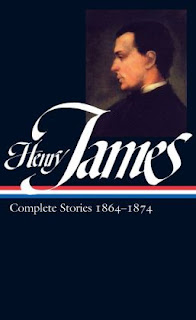
After my ignominious defeat with The Wings of the Dove , I thought I'd try a few Jamesian short stories.  I wanted to get back on the horse (so to speak), and anyway I didn't have any other ideas about who to read in July for this particular challenge.  So, I checked out volume I of the Library of America's 5-volume collection of James' short stories, which has his first 24.  I read three, and here they are: A Most Extraordinary Case -- Young Colonel Mason, veteran of the Civil War, is ill and alone when his aunt comes to his rescue and takes him out to her country home to nurse him back to health.  He makes friends with his doctor and with his lovely and intelligent cousin Caroline, but somehow he just doesn't recover completely... The Romance of Certain Old Clothes -- A historical sketch set during the colonial era.  Two sisters compete for the affections of an excitingly classy English visitor, and their mutual jealousy might last even beyond death. O...

The Wings of the Dove, and my failure at reading it

Image
Even this edition wouldn't have helped. This month's theme is Realism in Fanda's Literary Movements Challenge.  I chose to read Henry James' The Wings of the Dove , which is one of my Classics Club titles.  I quite enjoyed Portrait of a Lady a couple of years ago, and figured I would enjoy this too. Boy was I wrong.  Wings of the Dove is 700 pages long; 300 pages into it, I was unhappily slogging and sometimes skimming.  I had never gotten to care one bit for any of the characters.  I was curious about the scheme that is the center of the plot, but it hadn't even gotten started yet and I was losing patience.  I felt that there was so much detail and nuance and fine shading of feeling that the characters and plot were lost in the morass--a real forest-for-the-trees situation.  I eventually told myself to stop suffering and put the dang book down already, and promptly felt better. So I am hereby admitting defeat on this title.  It's my fir...

The Jungle Book

Image
The Jungle Book , by Rudyard Kipling For this month's literary movement challenge, I was pretty stumped.  It's Victorian month, and I've already read one Dickens and two Trollopes this year, so I was inclined to cry uncle.  My daughter suggested a children's story, which was a good idea...and then the light dawned.  Kipling!  I have read almost no Kipling!  It's doesn't get any more Victorian than that.  Said daughter was appalled to learn that I had never read The Jungle Book ( "What??  I've read it three times!" ), and so my choice was made.  (Don't tell, but I have also never read Just So Stories all the way through.) The first half of the book is stories about Mowgli and will be sort of familiar to people who have seen the Disney movie, though these are a lot more serious.  Jungle inhabitants have strict laws and standards.  And this is not a novel; it's two or three short stories that do not happen in chronological order. Af...

Work

Image
Work: a Story of Experience , by Louisa May Alcott I was kind of lost for a Transcendentalist pick for the literary movement challenge.  I've read the most famous works and I'm not that big a fan.  (While I'm all for simplicity and self-reliance and all, I just don't like the song and dance they make about it.)  So I was looking at my bookshelf, rather hopelessly, when I noticed Louisa May Alcott's Work , a novel I never got around to reading.  It turned out to be a perfect choice, which is not to say that I enjoyed it much as a novel, but it's a perfect specimen of Transcendentalist feminism, a meditation on the very Victorian question "what can a woman do? " (I actually own a book titled What Can a Woman Do? or, Her Position in the Business and Literary World, by one Mrs. M. L. Rayne, from 1893.  Mrs. Rayne writes about professional women in every branch of business, including law, and also gives a selection of morally uplifting poetry and prose...

The Two Drovers

Image
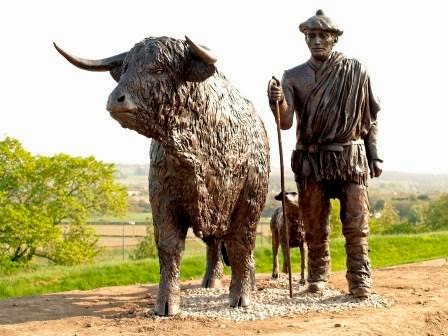
The Two Drovers , by Sir Walter Scott Some time ago, Scott's short story "The Two Drovers" was recommended to me as a way to step into the world of Waverley.  I've read Ivanhoe , but so far my (miniscule) efforts to  get interested in the Waverley novels have come to naught.  I think this is partly because I thought I had to start with the first one, and really I should start with Rob Roy or Heart of Midlothian , something like that.  Anyway, while I was looking for some Romantic stuff to read, I found "The Two Drovers" in that trusty old Norton anthology.  It's also found in Chronicles of the Canongate with two other stories. Statue of a Scottish drover Two drovers are setting off with their herds from the border of Scotland.  They'll walk to Lincolnshire to sell the cattle, and every night they'll rent fields along the way for pasturage.  Robin Oig is a Highlander, well-regarded and of a proud family, and he is good friends with the ...

Some Wordsworth

Image
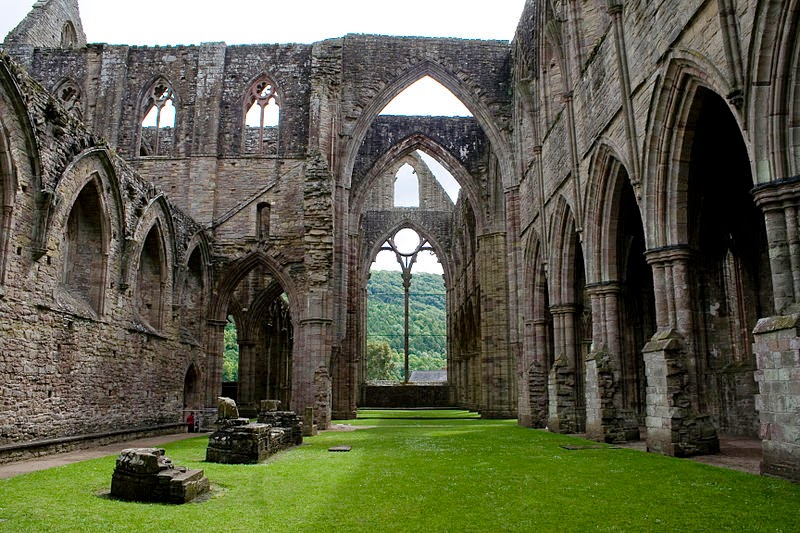
Selections of poetry by William Wordsworth I thought I would read some poetry by one of the quintessential Romantic poets, so I broke out my trusty Norton and chose a few pieces by Wordsworth, whose name is synonymous with Romanticism and sentiment.  I think he's the only one who lived long enough to make everybody tired of him while he was still around.  I tried to pick poems I've never read before, or at least ones that weren't all marked up in my book. Tintern Abbey, certainly a place to visit Lines Composed Above Tintern Abbey has Wordsworth re-visiting the spot after a five years' absence.  He falls into a meditation on how often he has refreshed himself with memories of this spot, and how he has changed from a boy to a young man, and how now, in maturity, he does not just take in the scene with his senses, but adds his reason to his feelings.  Now, he not only loves what he sees, but uses it as his spiritual and moral anchor. Therefore am I still A l...

William Blake: Selections

Image
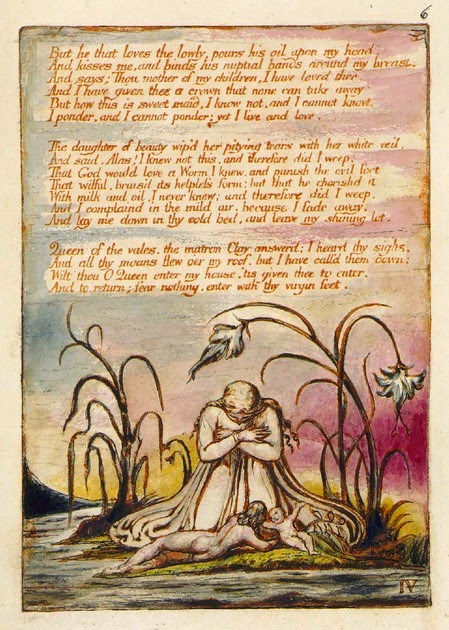
Some things by William Blake For this month's Romanticism theme, I thought I'd start at the beginning, with William Blake--especially with some things he wrote in the 1790s.  I've read Songs of Innocence and Experience a few times, and various other bits and bobs-- Jerusalem of course--but I had never read these sort of mythic pieces, long poems or whatever they are.   Blake etched and printed these as illuminated books, as he did so much of his writing.  (I must confess that though I know I should properly read them in the watercolor-painted images, I always find that very difficult.  It's hard on the eyes!  So, Norton Anthology it is.)  The Book of Thel is a mythic story about Blake's favorite theme of innocence and experience.  He was working on this at about the same time as the poems.  Thel is an airy spirit dwelling in "the Vales of Har," --at least, it's hard to tell.  She might be an unborn soul, or a desi...

The Essay on Man

Image
Alexander Pope The Essay on Man , by Alexander Pope For Fanda's Literary Movements challenges, I wanted to read something else Enlightenment-style before moving on to the Romantics.  I decided to read Alexander Pope's poem, The Essay on Man . Pope was known as a writer, but the Essay established him as a philosophical poet as well.  He wanted to express his theory of Man's place in the universe.  This is a long poem, divided into four parts, each tackling a different side of the question, and of course it is written in Pope's trademark heroic couplets.  (I'm always amazed at how much the poets of this period managed to produce in just one poetic form.  Then everybody got completely and utterly sick of heroic couplets and we hardly ever see them again, except in bad amateur schmaltzy poetry.)  It was to have been quite a bit longer and cover more material, but that never happened. The first epistle is the most famous and makes the argument that ...

Faust (Part I)

Image
Faust (Part I), by Johann Wolfgang von Goethe Goethe seems to have made his play about Faust the great work of his life.  He started writing pieces of it in the early 1770s, when he was in his early to mid-20s, published a preliminary version in 1808, and continued revising it until 1828 or so, when he published a final version.  That's Part I, which is what I read.  Part II took up most of Goethe's attention during his later years and was finished in 1831. Goethe's version is very different from Marlowe's, which I read several months ago.  It starts with a framing device that echoes the book of Job; the devil makes a bet with God that he can lead the virtuous scholar Faust astray.  When Mephistopheles arrives on scene in the form of a large black dog, Faust is already complaining that earthly knowledge is not enough and that he wishes to delve into the deeper knowledge afforded by black magic.  Mephistopheles has no trouble convincing him to agree t...

Henry V

Image
Henry V , by William Shakespeare  I've been wanting to read Henry V for a long time; I never have before, so I wanted to fill in that gap.  Everybody knows what happens--I don't like writing posts about Shakespeare plays because I feel like whatever I say, it's kind of pointless.  However, just in case, this is a "historical" play about the young Henry V, his claim to own all of France, and his campaign to win it.  In a surprise fluke, the English actually defeated the numerically superior French at the battle of Agincourt, for God, Harry and St. George. Even though I knew what to expect in the plot of Henry V , I had a really hard time getting into it.  My daughter and I got out the DVD of the movie--the 1989 one with Kenneth Branagh as Henry--and watched it together, and that really helped a lot (I got it for schooly purposes but we hadn't watched it yet).  What I mostly noticed about the film, which is beautifully produced with lots of setting a...

King Lear

Image
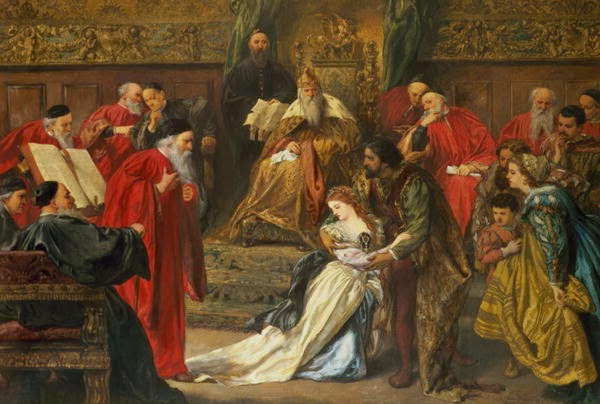
King Lear , by William Shakespeare  For the Literary Movement Challenge, Fanda asked readers to focus on drama.  Before I figured that out, I was considering reading Tyndale's Obedience of a Christian Man and worrying that I would never be able to read it in the time.  I still plan to read Tyndale but it was somewhat easier to read a couple of Shakespeare plays for February.  Cordelia in the court of King Lear, by Ford Madox Brown King Lear is a fairy tale cast as a historical event and tragedy.  Lear was a legendary pre-Roman king in Britain; he appears (spelled Leir) in Geoffrey of Monmouth's History of the Kings of Britain , and in Holinshed, where Shakespeare got the story.   Lear, a rather silly king, decides to divide his kingdom between his three daughters based on how fervently they declare their love for him.  The two older sisters walk off with the swag, and youngest Cordelia, who honestly loves her father but refuses to flatt...

The Journey Through Wales and Description of Wales

Image
The Journey Through Wales and Description of Wales, by Gerald of Wales This was a really fun medieval travelogue.  Like another of Gerald's works, The History and Topography of Ireland , it would be a good selection for someone interested in dipping their toes into medieval literature. In 1188, Archbishop Baldwin (of England and Wales) made a tour of Wales to drum up support for an impending Crusade.  Gerald was part of his entourage, and he kept a record of the trip which he turned into The Journey Through Wales.  He details every stop, but relatively little of the text is actually about converting potential crusaders; he really talks a lot about local history and wonders.  Old battles and feuds, miracles, interesting anecdotes, and monuments fill the pages.  It is very fun.  For example: St. David's cathedral was founded in honour of Saint Andrew the Apostle.  The place where it stands is called the Valley of Roses.  A better name for it ...

The Literary Movements Reading Challenge

Image
Fanda at Classiclit has got a lovely new challenge for next year--the Literary Movement Reading Challenge.  It's pretty ambitious.  Take a look at what she says (I'm giving the first part but there's lots more at the post): The aim is to study how our literary world has been evolving from Medieval era up to the present. There are so many lists/timelines out there, but I particularly use this literary periods timeline from online-literature dot com ; firstly, it is simple and nicely presented, and secondly because the number of the movements fits more or less with the challenge purpose. If you see the info-graphic, there are thirteen movements. I will dedicate each month for each movement; but as the Beat Generation period is mostly overlapping the Bloomsbury 's, I will merge them into one month. 1.   Reading (or rereading) at least one book each month according to the literary movements we are covering; here is the list: January: Medieval February: ...