Posts

Showing posts with the label Australian literature

The Things She's Seen

Image
The Things She's Seen, by Ambelin and Ezekiel Kwaymullina Here's my title for AusNovember!  I've been excitedly waiting for it to wend its way through the library process so I could check it out.   This is a new YA novel by a brother and sister team.     Beth is dead, to begin with.  The only person who can still see her is her dad, who was so devastated by her death in a car accident that she stuck around in hopes of helping him get back on his feet.  He's a policeman -- a detective -- and he's been asked to investigate a house fire in a tiny country town that left one unidentified person dead.  A simple case for a guy who needs easing back into his job. Or perhaps not.  Beth is sure there's more to this than meets the eye.  The house was a group home for foster kids, run by an administrator and a nurse, but nobody ever saw the kids out and about.  The single witness to the fire is a girl who will only communicate what she kno...

CC Spin: The Fortunes of Richard Mahony

Image
Just a note: I wrote this post a couple of weeks ago, before all the worrying events that are happening right now.  Like all of you, I am sad and outraged and feel a bit helpless.  Meanwhile, here's a post about Australia over 100 years ago... So 80s! The Fortunes of Richard Mahony, by Henry Handel Richardson (Ethel Florence Lindesay Richardson) Australia Felix (1917); The Way Home (1925); Ultima Thule (1929) Wow, this was quite a story!  This three-volume novel is a fictionalized version of Ethel Richardson's parents' lives.  We follow Richard Mahony, an English emigrant to Australia, and his wife Mary for nearly 30 years.  I wound up with some historical notes and comparisons at the end of this post, so...this is a long one, folks. Australia Felix starts with Mahony in his early 30s, in 1850s gold-rush Ballarat.  Although a qualified doctor, he runs a general-goods shop, badly.  He meets Polly, aged 16, a quiet, intelligent girl living with a rollic...

Dark Emu -- Summer Book 7

Image
Dark Emu: Black Seeds: Agriculture or Accident?  by Bruce Pascoe Some time back I read this amazing Australian book, The Biggest Estate On Earth , by Bill Gammage, which was a large, detailed explanation of Aboriginal land management techniques.  My mind was blown, and so then I needed this book by Bruce Pascoe to learn more. Dark Emu is more of a short overview of several aspects of Aboriginal life; it is not as exhaustive on one topic as the Gammage book.  Pascoe uses old diaries and descriptions of what early white settlers found to show what he means.  He points out that Aboriginal people were engaging in sedentary farming; they were not 'only' hunter-gatherers.  They had villages, and large stores of food.  They had complex engineered aquaculture sites on rivers that allowed fish to flourish and be easily caught.  White settlers did not always recognize what was going on right in front of them, either because Aboriginal technologies looke...

Cloudstreet

Image
Cloudstreet, by Tim Winton In honor of Brona's Australian November event, I read Cloudstreet .  I'd heard it was great, but I didn't know a thing about it otherwise.  It turned out to be a sort of different take on a family saga novel, and indeed it was pretty great reading, even though it's not quite my usual sort of thing. Two disasters lead to two families heading to Perth in the early 1940s.  The Pickles family -- hard-drinking, shiftless, prickly, and always trusting to luck -- inherit a large ramshackle house, and rent half of it to the Lambs -- industrious, full of rectitude and driven by a drill sergeant of a mother.  The only thing they have in common is poverty, and for twenty years they share the house but not a lot else.  Eventually, though, they pull together and find means of unity and forgiveness -- of a sort, anyway -- in the younger generation. It's a hardscrabble story, with plenty of rough edges.  It also has some supernatural ele...

AusNovember Warmup

Image
Since we're getting close to November, Brona has posted some fun warmup questions, which are guaranteed to make you feel more clueless than you thought you were.  Want to join in the party?  Go check out her post and write your answers! 1. Tell us about the Australian books you've loved and read so far.  I really liked Seven Little Australians , except for the end. I enjoyed most of Picnic at Hanging Rock , and I loved My Brilliant Career .  I was blown away by The Biggest Estate on Earth , which is non-fiction. 2. When you think of Australia, what are the first five things that pop into your mind? Kangaroos, Uluru, a lot of hot dry land, kookaburras, wildfires.... really being kind of a lot like California only with marsupials.  3. Have you ever visited Australia? Or thought about it?  What are the pro's and con's about travelling to/in Australia for you? What are/were your impressions?  I would love to visit Austral...

The Biggest Estate on Earth

Image
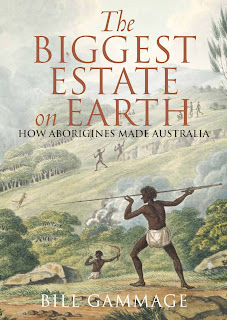
The Biggest Estate on Earth: How Aborigines Made Australia, by Bill Gammage This book wins the prize for Most Mind-Blowing Book of 2017 So Far.  Way back during Brona's AusNovember event, she posted about this book, and obviously I was going to have to read it.  I don't really know diddly-squat about Australian history, except for a vague impression of hunter-gatherer Aborigines decimated by British colonialism/prison settling.  I certainly did not know that the Australian landscape of 1788, when the First Fleet arrived from Britain, was a very different place than it is now. The native Australians were running the entire continent as a vast...park.  Like a "gentleman's estate in England" kind of park, with lots of grassland and trees scattered about, with places for game to feed and multiply.  They had every inch of the land covered and took care of all of it, encouraging different habitats and plant varieties in carefully planned patterns.  Thousa...

The Secret River

Image
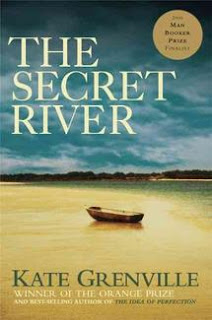
The Secret River , by Kate Grenville I scootched in just before the deadline!  I wanted to participate in Brona's AusReading Month , so I picked out a book that's been on my mental (not literal) TBR pile for a few years--Kate Grenville's The Secret River , which (in case you care) won the Commonwealth Prize and was in the finals for the Man Booker Prize.  I got kind of bogged down when it became obvious that really unhappy things were going to take place, but then I gathered up my courage and read the second half in a day. William Thornhill is a London waterman who--like most laborers--steals here and there to get by.  When he's caught, he's sentenced to death, but gains a merciful sentence of transportation, together with his beloved wife Sal and their baby.  He lands in Sydney in 1806, and after years of labor, gains his own ship and a route carrying goods between tiny farms and the town.  Will's dream is to own some land himself, but eventually he has t...

Picnic at Hanging Rock

Image
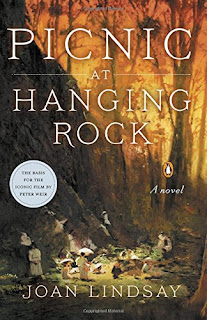
Picnic at Hanging Rock , by Joan Lindsay Summer in 1900 -- Valentine's Day, in fact -- and the students at Appleyard College for Young Ladies are going on a picnic.  Hanging Rock is a lovely setting for a day out.  Four girls--three confident and pretty seniors, and one 14-year-old hanger-on--decide to climb up a little way into the wilderness.  When only one returns, hysterical, and a math teacher is also found to be missing, a search is started, but there is no sign of any of them.  Days later, a young man bent on one last search finds one of the girls, but no one else is ever seen again. This is a mysterious story that describes the ever-widening ripples of events caused by the girls' disappearance. For the most part, I liked Picnic at Hanging Rock quite a bit.  It's a good novel, written in the late 1960s and also made into a film in the 70s, apparently a fairly well-known one.  (In fact, the back-cover blurbs highlight the film, quoting Lena Dun...

My Brilliant Career

Image
My Brilliant Career, by Miles Franklin It's AusNovember, and I read one of the really obvious classics, this novel by Stella Maria Sarah Miles Franklin, who wrote it for friends when she was only a teenager, It was published in 1901, when she was about 22.  It was a hit, but Franklin was upset by some reactions--I think an awful lot of people assumed it was more biographical than it was, or than she wished them to think it was--and she withdrew it for decades.  It discouraged her from writing more novels for a long time. Sybylla is an imaginative, intelligent, discontented girl living in near-poverty on her family's station.  Once her father owned beautiful farmland, but his bad business decisions landed them all on a desolate station, and he has become a useless, tragic drunk.  Mother and children work hard and earn little, and it is with relief that her mother sends Sybylla to live with her grandmother at Caddagat.  There Sybylla blossoms, but not withou...

AusReading in November

Image
Brona is hosting her annual AusReading event in November and this time I'm going to join.  I've wanted to the last couple of years.  Brona says: November is AusReading Month - a month long celebration of all things Aussie, Aussie, Aussie.   Join us as we read, review and blog about all things Australian - classic books, contemporary stories, children's books, poetry, non-fiction, short stories, popular, literary, award-winning - whatever.   The only stipulation is that it has to be written by an Australian based author  or predominantly set in Australia.   The rules are simple: read one, two or more Australian books throughout the month of November. Write a review on your blog and link it back here.   Visit and comment on your fellow bloggers posts to build up our growing community of Aussie book lovers. Visit Bron a's post to sign up and find links to suggestions! I t seems to me that it can be a bit tricky to find much Aust...