Posts

Horrorstör

Image
Horrorstör, by Grady Hendrix You've probably seen this cute horror novel around; it's made to look like an Ikea catalog.  It's set in a fictional Ikea knockoff, Orsk, so as not to offend the actual Ikea, but it's exactly the same and pretty funny.  The items all have pseudo-Scandinavian names, but goofier. Amy, a disaffected Orsk employee behind on her rent, is recruited to stay the night with a couple of other staff; every morning, they've been finding weird smelly stains on the Brooka sofas and busted Liripip wardrobes, so the manager wants to find out what's going on.  At first, nothing much, though they find another two employees spending the night in hopes of finding a ghost and making a smash hit ghost hunting show.  But then things start going a bit wrong. It's a traditional haunted mansion story, except set in an Ikea, which works really well.  Lots of space to run around and get lost in.  Five bucks says someone wants to make a movie!...

Arabian Nights and Days

Image
Arabian Nights and Days , by Nahguib Mahfouz After Shahrzad succeeds in telling her story for three years, and gives birth to a son, and stops the sultan from killing a new bride every morning...what happens then? In chapter-long episodes, we follow the fortunes of the sultan's city and people, who frequently come under supernatural influence.  A pious man is beset by a genie, who orders him to kill the corrupt chief of police.  Two evil spirits produce a wedding night for a young couple and then separate them.  A man is given a cap of invisibility, but ordered not to obey his conscience in using it.  A man is beheaded for corruption, but deposited into a new body.  Finally the sultan himself sees amazing wonders. It's written in a style very much like the 1001 Nights , and many of the characters have a strong tendency to speak in aphorisms and proverbs--sometimes for entire conversations. I liked this quite a bit more than my previous Mahfouz attempt , ...

What If?

Image
What If? Serious Scientific Answers to Absurd Hypothetical Questions , by Randall Munroe Lots of people read Munroe's webcomic xkcd - -I do--and if you don't, you should probably take a peek at it to see if you'd like it.  It's full of geeky fun.  Munroe also writes a column called What If? in which you can send in a ridiculous question and he'll answer it in great detail.  For example: What if I collected a mole of moles? What if a baseball was thrown at 90% of the speed of light? What if I collected all the elements and arranged them according to the periodic table? What if I dove into a spent nuclear fuel pool? How long could a nuclear submarine last in orbit? What if we all shone laser pointers at the Moon? What if we built a bridge out of Legos? Many of the answers to these questions are some variation on "we would all die horribly," so the fun is in the details.  (You would not die if you dove into a spent nuclear fuel pool; technicians ...

Henry James: Three short stories

Image
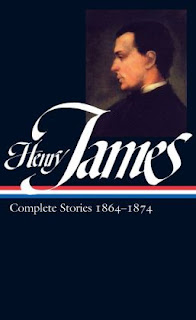
After my ignominious defeat with The Wings of the Dove , I thought I'd try a few Jamesian short stories.  I wanted to get back on the horse (so to speak), and anyway I didn't have any other ideas about who to read in July for this particular challenge.  So, I checked out volume I of the Library of America's 5-volume collection of James' short stories, which has his first 24.  I read three, and here they are: A Most Extraordinary Case -- Young Colonel Mason, veteran of the Civil War, is ill and alone when his aunt comes to his rescue and takes him out to her country home to nurse him back to health.  He makes friends with his doctor and with his lovely and intelligent cousin Caroline, but somehow he just doesn't recover completely... The Romance of Certain Old Clothes -- A historical sketch set during the colonial era.  Two sisters compete for the affections of an excitingly classy English visitor, and their mutual jealousy might last even beyond death. O...

Bridge to the Sun

Image
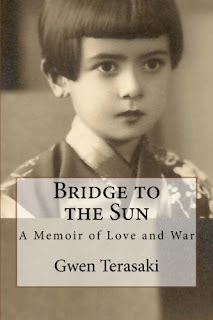
Bridge to the Sun: A Memoir of Love and War, by Gwen Terasaki This lovely memoir tells the story of Gwen Harold, who met a rising young Japanese diplomat, Hidenari Terasaki, at a party.  They fell in love and married...in 1931.  They spent their married lives working to build bridges between Japan and America. Mrs. Terasaki's story starts with Pearl Harbor and then goes back to the beginning of their relationship, so that she can tell about their early years and how desperately her husband (called Terry) worked to avert the war.  The militarist faction was gaining power, and Terry was one of the people who worked against them, even risking his life in a last-ditch effort to subvert their power.  When war came, he was devastated, knowing that the whole thing was insane, and defeat was inevitable. All the Japanese officials in the US were promptly interned in a hotel until they could be traded for the American officials stuck in Japan.  Then they boarded a ...

Five Children on the Western Front

Image
Five Children on the Western Front , by Kate Saunders I was fortunate to have a mom who went to the UK recently and picked up a copy of this award-winning children's book--which is not yet available here in the US.  It's a sequel to E. Nesbit's classic Five Children and It (and two following stories), in which five very ordinary Edwardian children find a Psammead--a sand-fairy--which grants wishes.  It's a wonderful story, and funny to boot.  ( You can read a bit about E. Nesbit at my 2013 post .) Those children were just the right age to grow up in time for World War I, and Kate Saunders decided to write the story.  She adds another, younger sibling born after the Psammead stories; Edie is nine, a couple of years younger than the Lamb, and young enough to be the center of the story. Just as war is breaking out in 1914, Edie and the Lamb discover the Psammead in the old familiar gravel-pit.  But the Psammead is unhappy and confused; his magic is gone an...

The History of the Renaissance World

Image
Love that gory picture! The History of the Renaissance World: From the Rediscovery of Aristotle to the Conquest of Constantinople, by Susan Wise Bauer This history series is challenging but very worth tackling.  The third volume of Susan Wise Bauer's history of the world project covers the Renaissance--what most people would consider to be the early Renaissance, really, but she makes an excellent case.  The Fall of Constantinople in 1453 marks the ending point of this book.  I haven't heard that she is writing another volume yet; she did a different project and recently came out with The Story of Science, a history of scientific discovery.  I'm looking forward to reading that, and I'm curious about whether she is planning to continue the history and produce a Durant-sized set or what. This is a chronological world history, and so it constantly jumps around geographically as Bauer moves the reader forward  in time.  As more societies develop writing...