Posts

Showing posts with the label modern fiction

The Strange Library

Image
 The Strange Library, by Haruki Murakami This is a funky little story -- at just 72 pages long, with a lot of artwork, it's a short story, not a novel.  It's a bit like somebody let Tim Holz illustrate it, but in fact the marbled papers and illustrations come from books found in the London Library (which I am still bitter about not being allowed to visit). Our narrator, an unnamed boy, just wants to return his library books and ask for a new one.  He's directed to room 107, in the cellar, and soon he is imprisoned and on a strange adventure.  Assisted by a mysterious girl and a sheep man, he meets all sorts of dangers; will he ever get home to his mother? An intriguing read, sometimes hard on the eyes (pale grey ink on magenta, whose idea was that?), and worth the time, which isn't much. 

Finishing all those books in November

Image
 I'm working on that pile!  Here are three of my pile books, plus two quick reads I stuck in around the edges. Junk Film: Why Bad Movies Matter , by Katharine Coldiron -- This book was just a delight to me, but then it was written by somebody who likes many of the same terrible movies I do but is much more knowledgeable than I am.  The first third of the book is dedicated to a monograph of Plan 9 From Outer Space and what makes it so interesting as a terrible movie.  Wonderful!  She talks about a failed TV show called Cop Rock in which somebody mashed a serious procedural cop show with a musical -- "I promise this is true."  Coldiron gets into literature and compares Irene Iddesleigh with Sean Penn's novels.  She explains why a low-budget 70s horror film called Death Bed is actually pretty good.  I loved it. If you like bad movies, this is a great book for you.  Others possibly not so much.     How Democracies Die , by Steven L...

Summerbook #9: No One Is Talking About This

Image
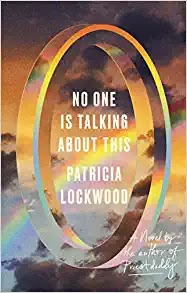
Hello!  I went to visit a friend for a week, and I had a lovely time.  Now I'm back, and --  No One Is Talking About This, by Patricia Lockwood I kept hearing about how fantastic and unusual this story is, and so put it on my summer list.  It is unusual, that's true.  I kind of liked it?  The characters remain unnamed, and it seems to (perhaps) be set in a slightly alternative America, where an unnamed dictator rules.  The protagonist is a woman famous for her viral tweets in what she calls 'the portal.'  For some reason, this gets her regular speaking gigs at TED-talk-like events.  The story is told in an endless cascade of short fragments, so that it feels much like scrolling endlessly through a social media feed. In the first half of the novel, she seems to get less and less tethered to reality, spending hours a day on her feeds and convinced that only the portal is important, while real life (which contains a slightly worried husband) isn...

Celestial Bodies

Image
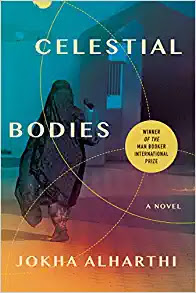
 Celestial Bodies, by Jokha Alharthi This novel has racked up the firsts.  Jokha Alharthi is the first Omani woman to have a novel translated into English, where it then won the Man Booker International Prize for 2019.  It's the first book translated from the Arabic to win that prize.  So, quite a book! This is a generational family novel, all taking place in one tiny Omani village.  And while my experience with multi-generational family sagas is pretty minimal, I think this one is a little different from the norm.  It bounces back and forth in time in a truly disconcerting manner; there are many short chapters focusing on various family members.  The thread that runs through it is a stream-of-consciousness narrative from Abdallah, the son, husband, and father who otherwise barely makes an appearance.  Yet he is a linchpin for the whole thing, right in the middle generation, a connection between families, and more openly emotionally raw than anyon...

The Lost Book of the Grail

Image
 The Lost Book of the Grail, by Charlie Lovett A little while ago, I had this novel recommended to me as one of the best novels the person had read this year.  Given that she reads a good deal more than I do, this was quite a recommendation, so I got it from the library.  Lovett has a fun take on the Grail legend, planting it in Trollope's fictional county of Barsetshire. Arthur Prescott teaches at the local university, but what he really likes is living in Barchester's cathedral close, going to Evensong (even though he's an atheist), and studying the Holy Grail in the cathedral's library.  Arthur's grandfather taught him that the Grail was real, and located right there in Barsetshire.  Then, to Arthur's dismay, Bethany arrives from the US to digitize the medieval manuscripts in the library, which might possibly be all right if it didn't raise the possibility that the cathedral would sell the books off.  And Bethany is suspiciously interested in the Holy Gr...

The Glass Hotel

Image
 The Glass Hotel, by Emily St. John Mandel I read Mandel's earlier novel, Station Eleven , a few years ago and enjoyed it quite a bit.  I wasn't really planning on reading this, though, until I heard an interview with her and got intrigued.  So here we are.  And it's a really good novel! At the north end of Vancouver Island, far away from anywhere, there stands a luxurious hotel facing out to sea.   2005: graffiti scrawled on the window: " Why don't you swallow broken glass? "  It's quickly covered with a large plant, and Vincent, the bartender, doesn't know what it means.  She flirts with the wealthy hotel owner, and within a few months they are living together, telling the world they're married.  2008: Jonathan Alkatis is arrested for running a huge international Ponzi scheme.  His investors' retirement funds are gone, among them a retired painter, a shipping executive, a Mafia gangster.  Vincent walks away and melts into the crow...

Death of the Snakecatcher

Image
Death of the Snakecatcher, by Ak Welsapar I'm always tempted by Glagoslav titles, but the trouble is they're mostly in Europe, and not that much in the US.  Anyway, I wanted to read something by Ak Welsapar, and this title is pretty tempting, don't you agree?  It's a collection of short stories, written over the decades of Welsapar's career. That career has been a long and difficult one, because Welsapar's homeland of Turkmenistan is one of the most repressive governments in the world.  (Currently, for example, they're one of two countries claiming not to have any Covid cases.)  In the early 90s, the government -- which was newly independent from the old USSR -- objected to a novel that criticized communism.  Suddenly Welsapar's books were no longer for sale, his wife lost her job, and they had to leave for Sweden.  Given that Welsapar writes in Turkmen, it was a worrying thing to do, but instead of losing his audience, he gained a wider one.  Th...

Eleanor Oliphant is Completely Fine, and, The Bookshop of Yesterdays

Image
Here are two novels that I'm putting into one post, because:  They are both books in which the reader, and the protagonist, have to figure out what the Terrible Thing in the Past is; They're both bestselling first novels, and very recent, and I picked them up from our Little Free Library; and  My friend made me read the first one, and I'm going to make her read the second one. Eleanor Oliphant Is Completely Fine, by Gail Honeyman This novel was all the rage a couple years ago, but I never got to it until now -- one of my closest friends read it recently, and recommended it to me.  Pretty soon I came across a copy in our Little Free Library and took it home, and I thought a quarantine would be a good time to read it.  Also, the April book for that one TBR challenge is supposed to be the newest book on the TBR shelf, and while I'm not 100% sure which book is the newest, this one seemed like a pretty good bet.  So here's the story: Eleanor Oliphant wo...

Women Without Men

Image
Women Without Men, by Shahrnush Parsipur It's 1953 in Iran, and it's dangerous out there.  But that's only the backdrop to the stories of five women from Tehran who all wind up in the same villa, in a pretty little town next to a river, where very unusual things happen.  This is a magical realism kind of novel, in fact.  And it also became a famous film. Mahdokht used to be a teacher, but now she just wants everything to be in harmony, so she plants herself in the villa's garden and waits to bloom. Fa'iza goes to see her friend Munis, who she doesn't actually like very much.  (She's hoping that Munis' brother will notice her.)  The two women's lives become intertwined, even though Munis has died a couple of times and can now hear the thoughts of others...they end up together at the villa. Farrokhlaqa, middle-aged housewife, is now a widow with ambitions in local politics.  She lets the others live with her in her new villa, and tries to write...

Professor Chandra Follows His Bliss

Image
Professor Chandra Follows His Bliss, by Rajeev Balasubramanyam I saw this reviewed fairly recently as an uplifting kind of a book that makes the reader happy, so I thought I'd give it a try. Professor Chandra is the world's foremost economist, and yet here he is, not winning the Nobel Prize.  Again.  Also, his wife left him years ago, only one of his three mostly-grown children want to talk with him at all, and he just got run over by a bicycle.  Forced into a leave of absence from Cambridge, Professor Chandra has to find something to do with himself. He starts with a four-day retreat in California, and then spends some time as a 'visiting scholar' in San Diego, learning how to do something besides work himself to death.  He gradually starts to try to mend fences with his children (letting them make their own choices is a help) and even his ex-wife, and finally starts to figure out that maybe work isn't the only thing out there.  He has always loved his ...

Summerbook #7: The Book of Chameleons

Image
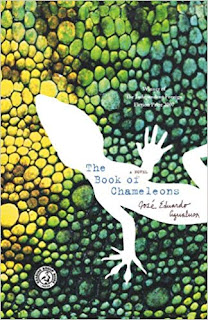
The Book of Chameleons, by Jose Eduardo Agualusa This is an Angolan novel, originally written in Portuguese.  I was intrigued by the premise, and also I like chameleons, but there are no actual chameleons in this story.  There's a gecko though, and I also like geckos. Félix Ventura sells genealogy.  If you have some money, but no family background, Ventura will fix up a nice respectable -- even illustrious -- family history for you.  His story is narrated by the gecko who lives on his walls (who is also the reincarnation of Jorge Luis Borges).  Ventura has sold quite a few new histories, and a couple of them are going to meet in interesting new ways to illuminate a murder mystery gone cold, while the gecko gains the name of Eulalio and has visionary dreams. I liked this novel pretty well, though I won't claim to have understood the whole thing.  It seemed very dreamlike to me, even the parts that were not dreams.  It's also very short.  I ...

Summerbook #3: Cat's Cradle

Image
Cat's Cradle, by Kurt Vonnegut Funny that I should read two books practically at the same time that use the cat's cradle game as a theme.  I wound up getting out this old Dover book I have about 'string games around the world' only I can't find the yarn to try them out.  I'm sure there is yarn around here someplace... Anyway.  Cat's Cradle is a nice read.  The narrator tells his story, starting with his project of writing a book about what was happening in America on the day that the bomb was dropped on Hiroshima.   But now he's a Bokonist, and he's had some adventures with his friend Newt, whose father was one of the major physicists working on the bomb.  That father also invented ice-nine , and Newt and his siblings have some. Bokonism is, I think, the famous part of this novel, and it's where the notion of a karass comes from.  The novel I'd read before made me think a karass was just your band of mates, but it's not; it'...

One Night @ the Call Center

Image
My copy features the movie poster One Night @ the Call Center, by Chetan Bhagat A couple of novels by Chetan Bhagat came across the donation table, and I took them home to see what they were about.  Bhagat is a popular young Indian author who, I gather, writes about the problems of young Indians.  This is only his second novel, written in 2005.  Bhagat writes in English, but a very Indian version of English, which I liked. Shyam, like a zillion other young adults in India, works in a call center.  They do a lot of computer support, but Shayam's department deals with appliances.  All night, he and his five team members take calls from Americans having trouble with their ovens or vacuums, which doesn't give them a wonderful opinion of American intelligence.  Shyam wants desperately to move up in the company; he and his co-worker Vroom built a webpage that deals with a lot of customer problems, but his manager just keeps spouting business cliches and t...

Women Talking

Image
A remarkably hideous cover IMO Women Talking, by Miriam Toews Whoof, this is a difficult one, folks, so you have been warned.  First a very short background, then the novel, then some information about the reality. For a few years in the mid-2000s, women in a particular Old Order Mennonite colony in Bolivia suffered from mysterious night-time violence.  In 2009, nine men were arrested and charged with drugging entire households with an anesthetic spray in order to rape girls and women.  They were convicted in a mass trial and are in jail. Miriam Toews, who grew up in a more liberal Mennonite family in Canada, wrote Women Talking as a sort of novelistic response to the events in Bolivia.  I don't know that she's actually trying to portray the people and events; the characters are based on people she knew, and she doesn't seem to have gone to Bolivia.  I really get the feeling that she tidied everything up a lot for her narrative, which may have been n...

My Sister, the Serial Killer

Image
My Sister, the Serial Killer, by Oyinkan Braithwaite Ayoola summons me with these words -- Korede, I killed him. I had hoped I would never hear those words again. Korede is the older, plain sister who works hard at her job as a nurse.  Ayoola is the younger and stunningly beautiful younger sister who always gets what she wants and has men falling at her feet.  Ayoola also has a worrying habit; every so often she needs Korede to help her clean up and hide the body of a boyfriend.  The first couple of times, it was easy to believe it was self-defense, but it's getting harder for Korede to believe in Ayoola's innocence.  And now Tade, the kind doctor Korede daydreams about, is interested in Ayoola. This is a gripping story!  It's a pretty fast read, but it's not a simple story at all.  In the end, it's pretty disturbing.  A good, suspenseful novel.

The Light and the Dark

Image
The Light and the Dark, by Mikhail Shishkin A few years ago I read a modernist novel by Shishkin, Maidenhair , which was strange and intriguing.  I've been meaning to read his next book for quite some time and I finally did it.  By now he's probably published three more, oh dear. This is a love story, maybe.  Alexandra (Sasha) and Vladimir (Vovka) are separated lovers who write to each other.  In long alternating letters, they reminisce about their time together, talk about their memories, and share what's happening in their lives.  Except...after a while, the reader starts to notice strange things.  Volodya is a soldier, and eventually we realize he's in China, helping to put down the Boxer Rebellion.  If you look for indications of Sasha's environment, there are few clues, but she is more modern and seems to live at the end of the century. And both of them seem to be writing into a void; they never reference each other's letters.  Vladim...

Reading Ireland: The Third Policeman

Image
The Third Policeman, by Flann O'Brien Flann O'Brien was a pen name for Brian O Nuallain (O'Nolan) -- he seems to have had a few.  He was born in 1911 in an Irish-speaking home, where his father was reluctant to send the children to an English-speaking school; they could all speak English just fine, and he preferred that they be taught in Irish, but such a school was not to be found.  O'Brien became a comic, satirical writer -- and he drank a lot -- and The Third Policeman was his last novel, written in 1939 but not published until 1967, after his death. The blurb on the back cover says O'Brien was "one of Ireland's great comic geniuses" along with Joyce and Beckett. The narrator, who never gets a name, is a young man, a fanatic scholar of the great philosopher de Selby, and he's going back to the family farm after university.  He's an orphan and the farm is run by one John Divney, who suggests they remedy their lack of money by killing a...

The Circle

Image
The Circle, by Dave Eggers Twenty minutes into the future, Mae is the newest hire at the hottest Internet company on Earth -- the Circle.  The Circle is like Google, Facebook, and all your business combined online; it makes everything super-easy, but you have to use your real identity.  No more passwords or 37 different accounts to remember, but also no online anonymity.  No more identity theft (this part is more than a little hand-wavy).  Mae is thrilled, and grateful to her best friend Annie, who is now at the top of the company and got her the job. The Circle's leaders are very into transparency; everything should be open and seen.  Mae starts to move up in the company, and pretty soon she becomes famous worldwide when she goes 'clear,' wearing a broadcasting camera at all times.  She loves the fame and attention, and she gets sucked into the Circle's goal of seeing everything, all the time.  Even as she loses friends and family, she believe...

The Brueghel Moon

Image
The Brueghel Moon, by Tamaz Chiladze After reading The Hand of a Great Master some time ago, I was interested in reading more Georgian literature.  The older stuff is not really available in English, but some newer things are; there's a publisher called Dalkey Archive that publishes a bunch of things in translation, and they have a Georgian series.  So I picked The Brueghel Moon without knowing anything much about any of them.  It's very modern. Levan, a well-to-do psychologist, is taken aback by the abrupt departure of his wife, who tells him that their marriage was just a habit and she was more his patient than his wife.  Left behind, he wanders aimlessly through memories, incidents, and possibly unreal fantasies.  Disjointed chapters feature a woman convinced that she had an affair with an alien, the wife of an ambassador, and strange links between them all. Interesting but strange and I won't claim to have understood it.   A good experien...

There Once Lived a Mother Who Loved Her Children.....

Image
There Once Lived a Mother Who Loved Her Children, Until They Moved Back In, by Ludmilla Petrushevskaya Ludmilla Petrushevskaya's writing was suppressed for years under the Soviet Union, although her stories are entirely domestic and not at all political.  These three novellas are about family; other collections are about love or other situations.  They're stories of desperation and misery, of the extremities of domestic hell, but they are also about how utterly ordinary such lives are.  These are tired women trying to raise children amidst violent men and sick relatives, with no money whatsoever. The first story, "The Time is Night," is much the longest.  Anna is trying to raise her grandson on the few rubles she gets from poetry readings, while her son, freshly out of prison, terrorizes her and her daughter has another baby on the way.  Anna loves her children desperately but can only either criticize or spoil them.  In "Chocolates With Liqueur," L...